Menu
mountaineering crevasse rescue in Colorado
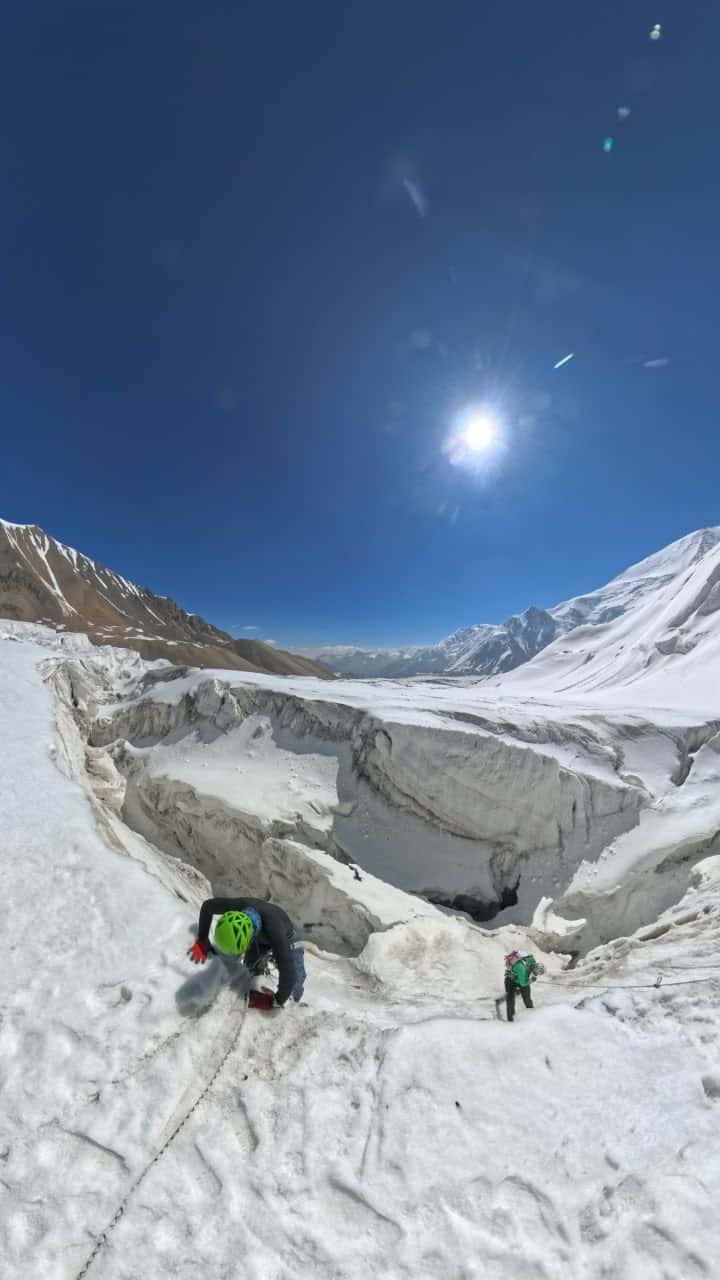
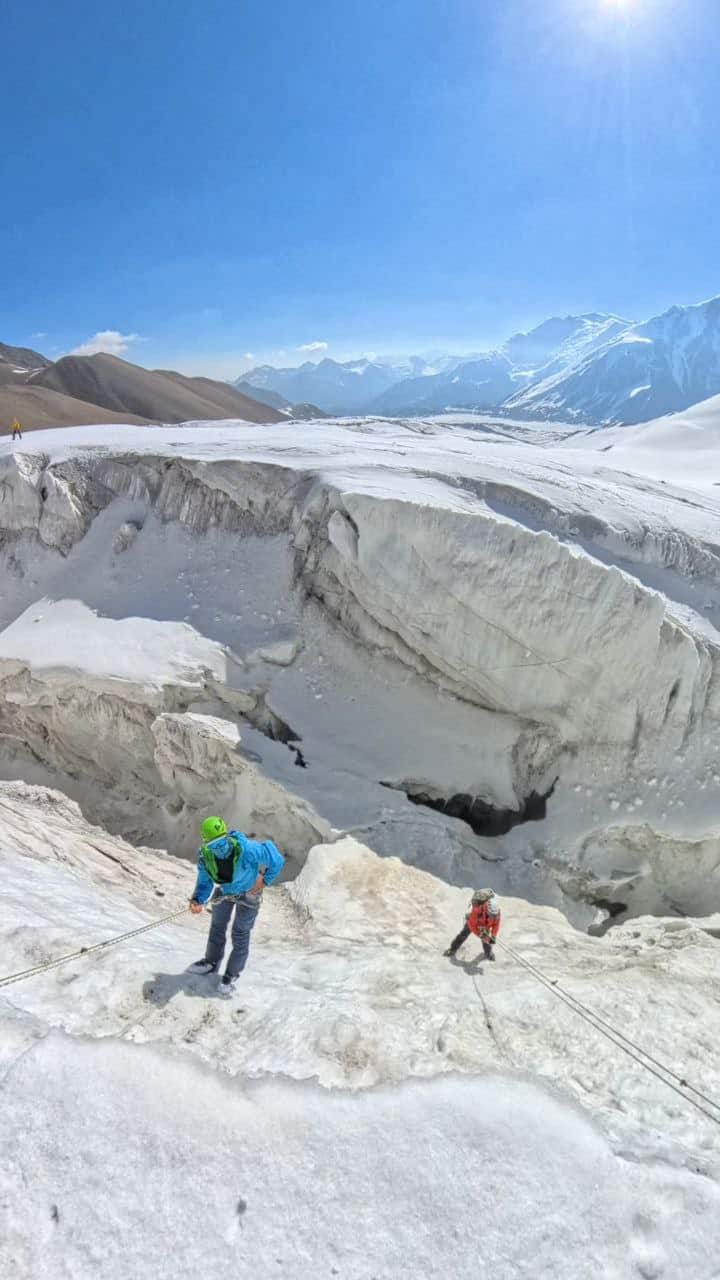
Traveling on glaciers is one of the most rewarding experiences in mountaineering, but it comes with real risks. Hidden crevasses, unstable snow bridges, and sudden falls make glacier safety an essential skill for every climber. Our crevasse rescue class in Colorado is designed to prepare you with the knowledge and hands-on practice needed to travel confidently in glaciated terrain.
During this mountaineering training, you will learn how to move safely as a rope team, identify hazards, and use proven systems to rescue a partner from a crevasse. Instruction covers anchor building in snow and ice, hauling techniques (2:1, 3:1, 5:1), and self-rescue methods using prusiks and ascenders. Small group sizes ensure you get plenty of practice and personal coaching from our certified guides.
By the end of the course, you’ll have the confidence to respond quickly and effectively in crevasse rescue situations and to be a reliable partner on alpine climbs and international expeditions.
What You Will Learn
Team rope travel on alpine glaciers – quick review
Anchor building in snow and ice – quick review
Self-rescue techniques – prusik, ascenders, hauling
Partner rescue systems – 2:1, 3:1, 5:1 hauling
Team communication and decision making
Emergency response and risk management
Who This Course Is For
BEGINER
INTERMEDIATE
Beginner to intermediate mountaineers
Climbers preparing for international expeditions
Outdoor professionals looking to refresh rescue skills
Why Choose American Mountain School for Crevasse Rescue Class?
Certified Expertise – Learn from IFMGA/AMGA-certified guides with real glacier and expedition experience.
Hands-On Training – Small groups, personalized coaching, and maximum practice time on snow and rope systems.
Proven Curriculum – Step-by-step crevasse rescue techniques taught in clear, practical progressions.
RMNP Location – Train in the stunning alpine terrain of Rocky Mountain National Park, only a short drive from Denver and Boulder.
Expedition Ready – Build the skills you’ll need for alpine climbs and international glacier expeditions.
EXCELLENT Based on 32 reviews
 Posted on Google
 L. WalkerGreat time climbing Longs with Alex! Far and away best bang for your buck. Highly recommend.Posted on Google
 Erika MayI highly recommend American Mountain School and Alex. He helped me fulfill a long time dream of summiting Longs Peak. He was knowledgeable, patient, calm and very strong and helped me feel safe the whole time.Posted on Google
 James WyzykowskiAlex took great care of me. I intended to quit before starting because I was suffering from the altitude. Alex gave me encouragement and brought me to the top of Longs Peak. At 68 years old, I must have been a lot to handle, but he was very careful and understanding giving me lots of breaks along the way. Recommend his services greatly.Posted on Google
 Daniel MurrayI had an excellent experience climbing Mount Baker with the American Mountain School. I really enjoyed Alex's expert guidance and great sense of humor. He is truly a high-caliber guide. I am definitely going to book another trip soon!Posted on Google
 OleksandraI honestly can’t put into words how grateful I am for Alex. His professionalism, patience, kindness, and support made all the difference. This was my first real mountaineering experience, and to be honest, I was far from being in the best shape of my life. Nothing humbles you quite like the mountains. I struggled, especially on summit day. The weather was brutal, the conditions were challenging, and there were many moments when I wanted to stop and turn around. But Alex’s calm professionalism, experience, and steady encouragement kept me moving forward one step at a time. Despite the odds, we made it to the summit of Mount Baker, and without Alex, I would not have been standing there. What I gained from this climb was much more than reaching a summit. It gave me confidence in myself and showed me that I am capable of more than I thought possible. That is a gift I will carry with me for a very long time. I will always be grateful to you Aleksandr for helping make this experience possible. I cannot recommend him highly enough, and I’m already looking forward to future ascents together.Posted on Google
 Koen DolezarPosted on Google
 Nick T (Nick)We booked the 2-day advanced multipitch rock climbing course with Alex Gukov during our Colorado rock climbing trip. We already had plenty of sport climbing experience and wanted to take our climbing to bigger rock faces, multipitch routes, and learn efficient rappelling. Alex taught us plenty of anchor building techniques and rappelling techniques. We were able to apply and practice the principles immediately to climb multipitch! The course of highly worth it and made our climbing trip so much more meaningful. He is very experienced and knowledgeable, plus he shared plenty of Epic mountaineering stories. Would be glad to learn more from Alex in the future! Thanks Alex!!!!Posted on Google
 Hidenori TakahashiI traveled to Denver from Japan for a business trip and hoped to climb one of Colorado’s 14ers while I was there. After searching online, I found American Mountain School and was very lucky to be guided by Alex. Because I had not climbed on snow for quite a long time, and because my equipment was not fully adequate for the conditions, I was honestly a little anxious. However, thanks to Alex’s great experience, calm judgment, and thoughtful support, I was able to reach the summit safely and return without problems. Climbing at an altitude that we do not have in Japan, with some remaining snow, became one of the best memories of my trip. Thank you very much, Alex.Posted on Google
 Jacob TrentmanAlex was a great instructor for crevasse rescue/ safety. I would recommend. Thanks Alex!Posted on Google
 Justin LeopoldTLDR; Great experience. My friend Jim and I hired Alex to take us out for a Lead Ice Climbing class. Alex was very friendly, easy to learn from, and had tons of great tips and tricks from years of high end mountain climbing in the greater. Jim and I got a lot of practice placing screws as well as building anchors and v-threads. We left really pleased and stoked. I would recommend Alex and AMS for any skills you need for you future adventures!
Class Overview
Gear list
Clothing
Meeting location
Pricing
Class Overview
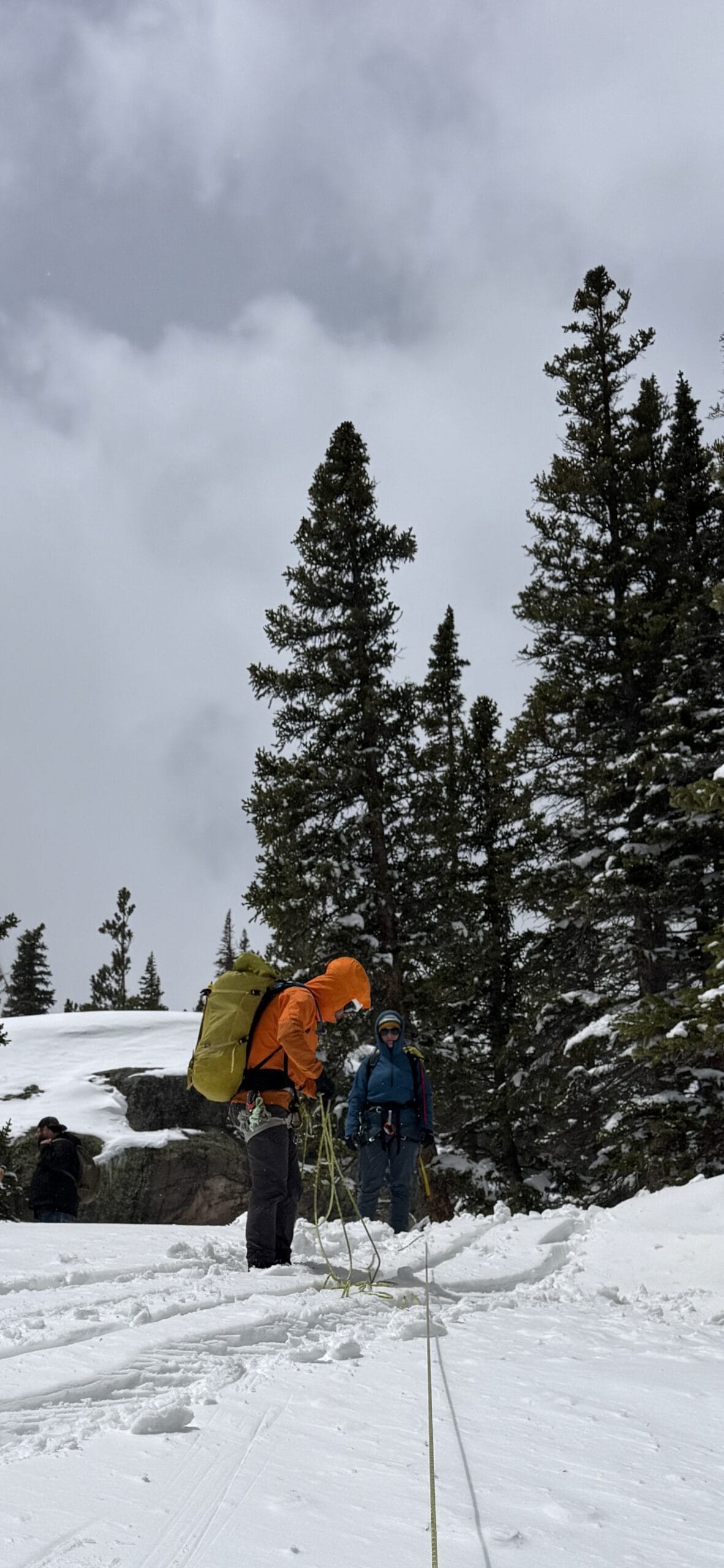
Our Crevasse Rescue Class in Rocky Mountain National Park is built around hands-on practice, with the majority of the day focused on self-rescue and partner rescue systems. The goal is to give every participant the chance to repeat each technique multiple times until it feels natural and efficient.
We begin with a short hike into the training area and a quick review of essential rope skills, knots, and anchors. This refresher is brief, since most students will already have covered these skills in our Intro to Mountaineering course.
The first major training block focuses on self-rescue techniques. You will practice ascending the rope using prusiks or mechanical devices, escaping the belay, and transferring the load in realistic scenarios.
After a short break, we shift into the core of the course: partner rescue systems. This is where you’ll spend most of the afternoon, learning how to set up and run 2:1, 3:1, and 5:1 hauling systems, manage load transfers, and work efficiently as a rope team to rescue a fallen climber. Training emphasizes hands-on repetitions, teamwork, and problem-solving under pressure.
We conclude the day with a full rescue scenario that brings all the skills together, followed by a group debrief and individual feedback from your guide. By the end of the class, you’ll have the confidence to respond quickly and effectively in crevasse rescue situations and to be a reliable partner on glacier climbs.
Gear list
INCLUDED: GROUP GEAR (provided by AMS)
Ropes – Durable dynamic climbing ropes for rescue systems and practice.
Slings & Cordelettes – Nylon or Dyneema® for building anchors and hauling setups.
Ice Screws & Snow Pickets – For snow/ice anchors in rescue scenarios.
Pulleys & Mechanical Devices – For hauling practice and efficient rescue systems.
Rescue Kits – Complete setup for crevasse rescue practice.
PERSONAL GEAR (available from AMS if you don’t have your own)
Climbing Helmet – UIAA/CE-approved, comfortable and secure.
Climbing Harness – Adjustable harness with gear loops and belay loop.
Crampons – Pre-fitted and sharpened, designed for snow and glacier use.
Ice Axe (Classic Mountaineering Tool) – For security and basic anchor building.
Locking Carabiners (2 pcs) – For belaying, hauling, and anchor systems.
Prusik Loops & Accessory Cord – For self-rescue and hauling practice.
Ascender or Mechanical Device – For rope ascent in self-rescue practice.
- Snow microspikes – for approach
EXCLUDED: PERSONAL ITEMS (bring your own)
Mountaineering Boots ( rental available ) – Crampon-compatible, insulated, suitable for snow travel.Trekking Pole(s) – At least one recommended for approach and descents.
Layered Clothing System – Base layer, insulating mid-layer, and waterproof shell.
Gloves – At least two pairs: thin dexterity gloves for rope work, and warm gloves/mitts for downtime.
Sunglasses – UV-protected with side coverage for snow glare.
Sunscreen & Lip Balm – High SPF for protection at altitude.
Water & Thermos – 1 L water (electrolyte mix recommended) + 1 L thermos for hot drinks.
Snacks/Lunch – High-energy food such as bars, trail mix, or dried fruit.
Personal First Aid Kit – Basic kit with blister care, bandages, and medication.
Note
We strongly recommend using your own personal gear for familiarity and comfort. If you are missing any equipment, contact us in advance — AMS can provide most items from our stock.
Clothing
CLOTHING (Weather-Appropriate Layers)
- Down Jacket with Hood: Insulated and lightweight, ideal for maintaining warmth during rest breaks.
- Hard Shell Jacket: Waterproof and windproof outer layer to protect from the elements.
- Gloves (2 Pairs): Insulated gloves for warmth and dexterity, plus an additional pair for backup.
- Mittens: Extra-warm mittens to wear during rest or in extremely cold conditions.
- Winter Hat: Thermal hat for warmth; it should fit under a helmet if needed.
- Storm Jacket (Membrane Type): Breathable, waterproof layer designed for intense weather.
- Storm Pants (Membrane Type): Durable, waterproof pants for high exposure to snow and ice.
- Base Layers: Moisture-wicking, insulated layers to maintain body heat.
- Mid Layers: Fleece or synthetic layers for extra warmth over the base layer.
- Light Gloves: Thin gloves for warmth during low-intensity periods or warmer weather.
- Buff: Versatile neck gaiter for added warmth, face coverage, or layering.
Meeting location
The meeting location for Intro To Mountaineering Course is RMNP Beaver Meadows Visitor Center
Pricing
Price Includes
Professional guide fees
Detailed course itinerary & instruction
Group equipment (ropes, rescue kits, pulleys, anchors, etc.)
Use of group safety gear as listed in the gear list
Price Does Not Include
Food and drinks during the trip
Park entrance or access fees
Transportation to/from trailhead
Personal gear (see gear list)
Trip cancellation insurance
Rescue insurance
Guide gratuity
Additional expenses due to unforeseen circumstances beyond the control of American Mountain School
Class Overview
Gear list
Clothing
Meeting location
Pricing
Class Overview
Our Crevasse Rescue Class in Rocky Mountain National Park is built around hands-on practice, with the majority of the day focused on self-rescue and partner rescue systems. The goal is to give every participant the chance to repeat each technique multiple times until it feels natural and efficient.
We begin with a short hike into the training area and a quick review of essential rope skills, knots, and anchors. This refresher is brief, since most students will already have covered these skills in our Intro to Mountaineering course.
The first major training block focuses on self-rescue techniques. You will practice ascending the rope using prusiks or mechanical devices, escaping the belay, and transferring the load in realistic scenarios.
After a short break, we shift into the core of the course: partner rescue systems. This is where you’ll spend most of the afternoon, learning how to set up and run 2:1, 3:1, and 5:1 hauling systems, manage load transfers, and work efficiently as a rope team to rescue a fallen climber. Training emphasizes hands-on repetitions, teamwork, and problem-solving under pressure.
We conclude the day with a full rescue scenario that brings all the skills together, followed by a group debrief and individual feedback from your guide. By the end of the class, you’ll have the confidence to respond quickly and effectively in crevasse rescue situations and to be a reliable partner on glacier climbs.
Gear list
INCLUDED: GROUP GEAR (provided by AMS)
Ropes – Durable dynamic climbing ropes for rescue systems and practice.
Slings & Cordelettes – Nylon or Dyneema® for building anchors and hauling setups.
Ice Screws & Snow Pickets – For snow/ice anchors in rescue scenarios.
Pulleys & Mechanical Devices – For hauling practice and efficient rescue systems.
Rescue Kits – Complete setup for crevasse rescue practice.
PERSONAL GEAR (available from AMS if you don’t have your own)
Climbing Helmet – UIAA/CE-approved, comfortable and secure.
Climbing Harness – Adjustable harness with gear loops and belay loop.
Mountaineering Boots – Crampon-compatible, insulated, suitable for snow travel.
Crampons – Pre-fitted and sharpened, designed for snow and glacier use.
Ice Axe (Classic Mountaineering Tool) – For security and basic anchor building.
Locking Carabiners (2 pcs) – For belaying, hauling, and anchor systems.
Prusik Loops & Accessory Cord – For self-rescue and hauling practice.
Ascender or Mechanical Device – For rope ascent in self-rescue practice.
EXCLUDED: PERSONAL ITEMS (bring your own)
Backpack (30–35 L) – Comfortable pack with room for gear, food, and layers.
Trekking Pole(s) – At least one recommended for approach and descents.
Layered Clothing System – Base layer, insulating mid-layer, and waterproof shell.
Gloves – At least two pairs: thin dexterity gloves for rope work, and warm gloves/mitts for downtime.
Sunglasses – UV-protected with side coverage for snow glare.
Sunscreen & Lip Balm – High SPF for protection at altitude.
Water & Thermos – 1 L water (electrolyte mix recommended) + 1 L thermos for hot drinks.
Snacks/Lunch – High-energy food such as bars, trail mix, or dried fruit.
Personal First Aid Kit – Basic kit with blister care, bandages, and medication.
Note
We strongly recommend using your own personal gear for familiarity and comfort. If you are missing any equipment, contact us in advance — AMS can provide most items from our stock.
Clothing
CLOTHING (Weather-Appropriate Layers)
- Down Jacket with Hood: Insulated and lightweight, ideal for maintaining warmth during rest breaks.
- Hard Shell Jacket: Waterproof and windproof outer layer to protect from the elements.
- Gloves (2 Pairs): Insulated gloves for warmth and dexterity, plus an additional pair for backup.
- Mittens: Extra-warm mittens to wear during rest or in extremely cold conditions.
- Winter Hat: Thermal hat for warmth; it should fit under a helmet if needed.
- Storm Jacket (Membrane Type): Breathable, waterproof layer designed for intense weather.
- Storm Pants (Membrane Type): Durable, waterproof pants for high exposure to snow and ice.
- Base Layers: Moisture-wicking, insulated layers to maintain body heat.
- Mid Layers: Fleece or synthetic layers for extra warmth over the base layer.
- Light Gloves: Thin gloves for warmth during low-intensity periods or warmer weather.
- Buff: Versatile neck gaiter for added warmth, face coverage, or layering.
Meeting location
The meeting location for Intro To Mountaineering Course is Eastes Park Safeway parking lot
Pricing
Price Includes
Professional guide fees
Detailed course itinerary & instruction
Group equipment (ropes, rescue kits, pulleys, anchors, etc.)
Use of group safety gear as listed in the gear list
Price Does Not Include
Food and drinks during the trip
Park entrance or access fees
Transportation to/from trailhead
Personal gear (see gear list)
Trip cancellation insurance
Rescue insurance
Guide gratuity
Additional expenses due to unforeseen circumstances beyond the control of American Mountain School
Book your Private Class
🔥 1–2 CLIMBERS • SAME PRICE
Start Your Public Class Today
Open to participants of all skill levels.
No prior ice climbing experience is required.
If our public class days are not convenient for you and you want to take it privately, please use the following button:
FAQ
No. This crevasse rescue class is designed for climbers who may not yet have glacier experience but are preparing for trips like Rainier, Denali, or international expeditions. Some familiarity with knots and basic rope handling is helpful but not required.
We run the training in Rocky Mountain National Park (RMNP), where we can simulate glacier conditions in snowfields. It provides a safe but realistic environment to practice rope systems and hauling techniques.
Don’t worry — AMS provides all group rescue gear (ropes, pulleys, anchors, etc.) and has a stock of personal equipment available (helmets, harnesses, crampons, ice axes). If you are missing something, let us know in advance and we’ll arrange it.
You should be comfortable hiking a few miles with a backpack and spending a full day outside in cold conditions. The rescue practice involves pulling, hauling, and working with ropes — it’s a workout, but accessible for most active people.
We keep groups small, usually 4–6 participants per guide, to ensure everyone gets plenty of hands-on practice and personal coaching.
Courses run in most conditions, including cold, snow, and wind. If severe weather makes training unsafe, we will adjust the location, modify the schedule, or reschedule.
This course gives you the foundation in glacier alpine safety and rescue systems. We recommend additional practice, refreshers, and combining this training with alpine climbing experience before tackling major expeditions.